Maximizing Yield in Minimal Square Footage: The Best Indoor Hydroponic Methods for Urban Spaces
By Website Factory Editorial Team · 1875 words
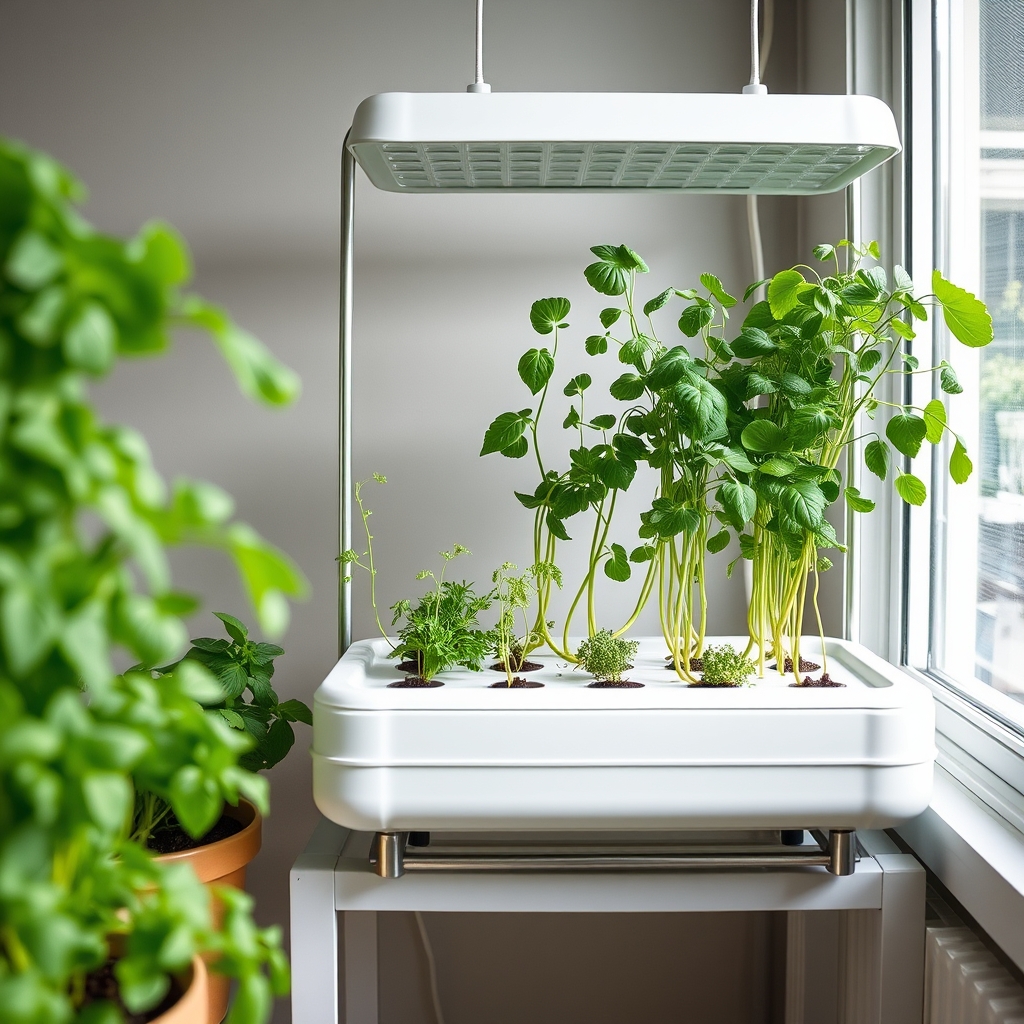
Maximizing Yield in Minimal Square Footage: The Best Indoor Hydroponic Methods for Urban Spaces
For the urban dweller, the dream of harvesting fresh, nutrient-dense greens often clashes with a harsh reality: the lack of traditional garden space. When your "garden" is a windowsill, a corner of a studio apartment, or a small balcony, conventional soil-based gardening becomes increasingly difficult due to weight constraints, mess, and spatial inefficiency.
This is where hydroponics—the method of growing plants in a nutrient-rich water solution rather than soil—becomes a transformative tool. However, not all hydroponic systems are created equal. For those operating in limited indoor environments, the goal is not just to grow plants, but to maximize yield per square inch while managing light, water, and nutrients effectively.
In this guide, we will investigate which hydroponic methods are most efficient for growing food in limited indoor urban spaces, evaluating them through the lens of spatial footprint, resource efficiency, and ease of maintenance.
Context and Decision Criteria: How to Choose Your System
When selecting a hydroponic method for a small indoor space, you cannot simply choose the one that looks the most futuristic. You must evaluate your choice based on specific technical and environmental criteria.
1. Spatial Footprint (Vertical vs. Horizontal)
In an urban setting, floor space is your most expensive commodity. A horizontal system that spreads across a table uses significant real estate. Conversely, vertical hydroponic setups utilize the "Z-axis," allowing you to stack layers of crops upward. When evaluating systems, ask: Can this system grow upward, or does it require a wide footprint?
2. Resource Efficiency (Water and Nutrients)
One of the primary advantages of hydroponics over soil is water efficiency. In a soil-based setup, much of the water evaporates or drains away from the root zone. In a closed-loop hydroponic system, water is recirculated. For small-scale indoor growers, efficiency also applies to nutrient management. Because you are providing nutrients directly to the roots, you avoid the waste associated with soil leaching.
3. Complexity and Maintenance
Small spaces often mean small living areas. You do not want a system that requires constant manual adjustment or creates significant humidity issues in a confined room. Systems like Deep Water Culture (DWC) are relatively simple, whereas Nutrient Film Technique (NFT) systems require precise pump management and monitoring of flow rates.
4. Light Integration
Indoor gardening is entirely dependent on artificial light. A system's efficiency is tied to how easily you can integrate indoor grow light requirements. If a system is too bulky or oddly shaped, it may create shadows that prevent even light distribution, leading to stunted growth.
Evidence-Based Options: Comparing Hydroponic Methods
To answer the question of which methods are most efficient, we must look at the mechanics of the three most viable contenders for small-scale urban environments: Nutrient Film Technique (NFT), Deep Water Culture (DWC), and Vertical Aeroponics/Hydroponics.
Nutrient Film Technique (NFT)
In an NFT system, a very shallow stream of nutrient-rich water (the "film") is continuously recirculated over the roots of the plants. The plants are typically held in tilted channels or gutters.
Nutrient Film Technique Benefits for Small Spaces:
- Weight Efficiency: Because the water layer is extremely thin, the total weight of the system is significantly lower than soil-based or deep-water systems. This is crucial if you are growing on shelving or near windowsills that have weight limits.
- Oxygenation: The constant movement of the thin film ensures that the roots are highly oxygenated, which can lead to faster growth cycles for leafy greens.
- Scalability: NFT channels can be arranged in tight configurations, making them excellent for narrow spaces.
The Trade-off: NFT systems are sensitive to pump failures. If the pump stops, the thin film of water disappears quickly, and the roots can dry out in a matter of hours.
Deep Water Culture (DWC)
In DWC, plant roots are suspended in a reservoir of highly oxygenated nutrient solution. An air stone, connected to an air pump, provides the necessary oxygen to prevent the roots from "drowning."
Efficiency Profile:
- Simplicity: DWC is often considered the easiest entry point for beginners. There are fewer moving parts compared to NFT.
- Stability: Because the roots are submerged in a large volume of water, the nutrient concentration and temperature are more stable. This provides a buffer against minor errors in nutrient dosing.
The Trade-off: DWC systems require larger reservoirs, which means a larger horizontal footprint. This can be a disadvantage in extremely cramped apartments.
Vertical Hydroponic Setups
Vertical setups are not a single method but rather a configuration strategy. You can implement a vertical DWC (using stacked towers) or a vertical NFT (using stacked gutters).
Why Vertical is King for Urbanites:
- Maximum Yield per Square Foot: By utilizing height, you can grow ten times the amount of produce in the same floor area compared to a single-layer horizontal system.
- Controlled Microclimates: Vertical systems allow you to place different types of plants at different heights, potentially managing light and temperature gradients more effectively.
The Trade-off: Vertical systems require more sophisticated lighting setups to ensure the plants at the bottom receive as much light as those at the top, and they can be more difficult to harvest.
Hydroponic vs. Soil Growing: A Comparison for Small Spaces
Practical Step-by-Step Method: Setting Up a Small Vertical Hydroponic System
If you are looking to maximize efficiency in a small space, a vertical NFT or a stacked DWC system is the recommended path. Here is a generalized method for setting up a basic vertical hydroponic unit.
Step 1: Site Selection and Light Assessment
Before buying equipment, assess your light. Most indoor edible plants (lettuce, herbs, kale) require significant light. Determine your indoor grow light requirements. You will likely need Full-Spectrum LED lights. Ensure your chosen location has access to a power outlet and can handle the slight increase in humidity.
Step 2: System Design and Assembly
For a small space, choose a modular vertical tower or a shelving unit with PVC gutters (for NFT).
1. Assemble the structure: Ensure the verticality is stable. If using shelving, ensure the shelf can support the weight of the water reservoir.
2. Install the plumbing: For NFT, ensure the gutters are at a slight incline so gravity pulls the water back to the reservoir.
3. Set up the reservoir: This is the heart of your system. It must be opaque to prevent algae growth.
Step 3: Nutrient and pH Management
Unlike soil, where nutrients are released slowly, hydroponic nutrients are immediately available.
1. Prepare the solution: Mix your hydroponic-specific nutrients into the water according to the manufacturer's instructions.
2. Monitor pH: This is the most critical step. Most plants thrive in a pH range of 5.5 to 6.5. If the pH is too high or too low, the plants cannot absorb the nutrients, regardless of how much you add.
3. Monitor EC (Electrical Conductivity): This measures the concentration of nutrients in the water.
Step 4: Planting and Maintenance
1. Seedlings: Start your seeds in rockwool or coco coir plugs. Once roots emerge, move them into the hydroponic system.
2. Daily Checks: Check water levels and ensure the pump is functioning.
3. Weekly Maintenance: Check pH and EC levels. Top off the reservoir with fresh water as needed.
Common Mistakes and Safety Limits
Even with the best equipment, small-space indoor gardening presents unique challenges that can lead to system failure if not managed.
1. Neglecting Humidity and Airflow
In a small, enclosed room, a hydroponic system can rapidly increase humidity levels. High humidity can lead to mold, mildew, and fungal diseases on your plants.
- Solution: Use small oscillating fans to ensure air is moving around the plants and consider a dehumidifier if the space is particularly small.
2. Over-Fertilization
In soil, excess fertilizer might be buffered by the organic matter. In hydroponics, there is no buffer. Adding too much nutrient solution can lead to "nutrient burn," where the salt concentration becomes so high it draws water out of the plant roots.
- Solution: Always follow the dilution ratios strictly and use a meter to verify concentrations.
3. Ignoring Water Temperature
In small reservoirs, water temperature can fluctuate wildly. If the water gets too warm (above 75°F/24°C), it holds less dissolved oxygen, which can lead to root rot (Pythium).
- Solution: Keep your reservoir in a cool area and monitor temperature regularly.
4. Electrical Safety
You are combining water and electricity in a confined space.
- Safety Limit: Always use GFCI (Ground Fault Circuit Interrupter) outlets. Ensure all cords are kept away from potential leaks and that your grow lights are mounted securely to prevent them from falling into the water reservoir.
Frequently Asked Questions
Which hydroponic method is easiest for a complete beginner?
Deep Water Culture (DWC) is generally considered the easiest because it has fewer mechanical parts and the large volume of water provides a safety buffer for nutrient and pH fluctuations.
Can I grow any vegetable hydroponically in a small space?
While you can grow many things, leafy greens (lettuce, spinach, arugula) and herbs (basil, mint, cilantro) are the most efficient for small spaces. Large, heavy plants like melons or large tomatoes are difficult to manage in vertical or small-scale indoor systems due to their weight and light requirements.
How much electricity will my indoor garden use?
The primary energy draw will be your grow lights and your water pump. Modern LED grow lights are highly efficient, but you should factor in the continuous run time (usually 12–16 hours a day) when calculating your energy usage.
Do I still need to fertilize if I am using hydroponics?
Yes. In fact, fertilization is even more critical. Because there is no soil to provide minerals, the nutrient solution you add to the water is the only source of food for your plants. You must ensure you are using nutrients specifically formulated for hydroponics, as they contain different mineral ratios than soil-based fertilizers.
Summary of Efficiency for Urban Spaces
To maximize your success in an urban environment, prioritize vertical hydroponic setups. If you have more floor space but want simplicity, Deep Water Culture is a reliable choice. If you are working with narrow, vertical gaps and want to minimize weight, the Nutrient Film Technique offers the best balance of efficiency and spatial optimization. By controlling your light, pH, and airflow, you can turn even the smallest apartment into a highly productive food source.
Sources
- https://extension.illinois.edu/container-gardens/fertilizing
- https://fieldreport.caes.uga.edu/publications/C787/gardening-in-containers/